
IN BRIEF
In the UK, 8,127 women started obesity medication through a program combining video check-ins, at-home blood tests and monthly clinical reviews.
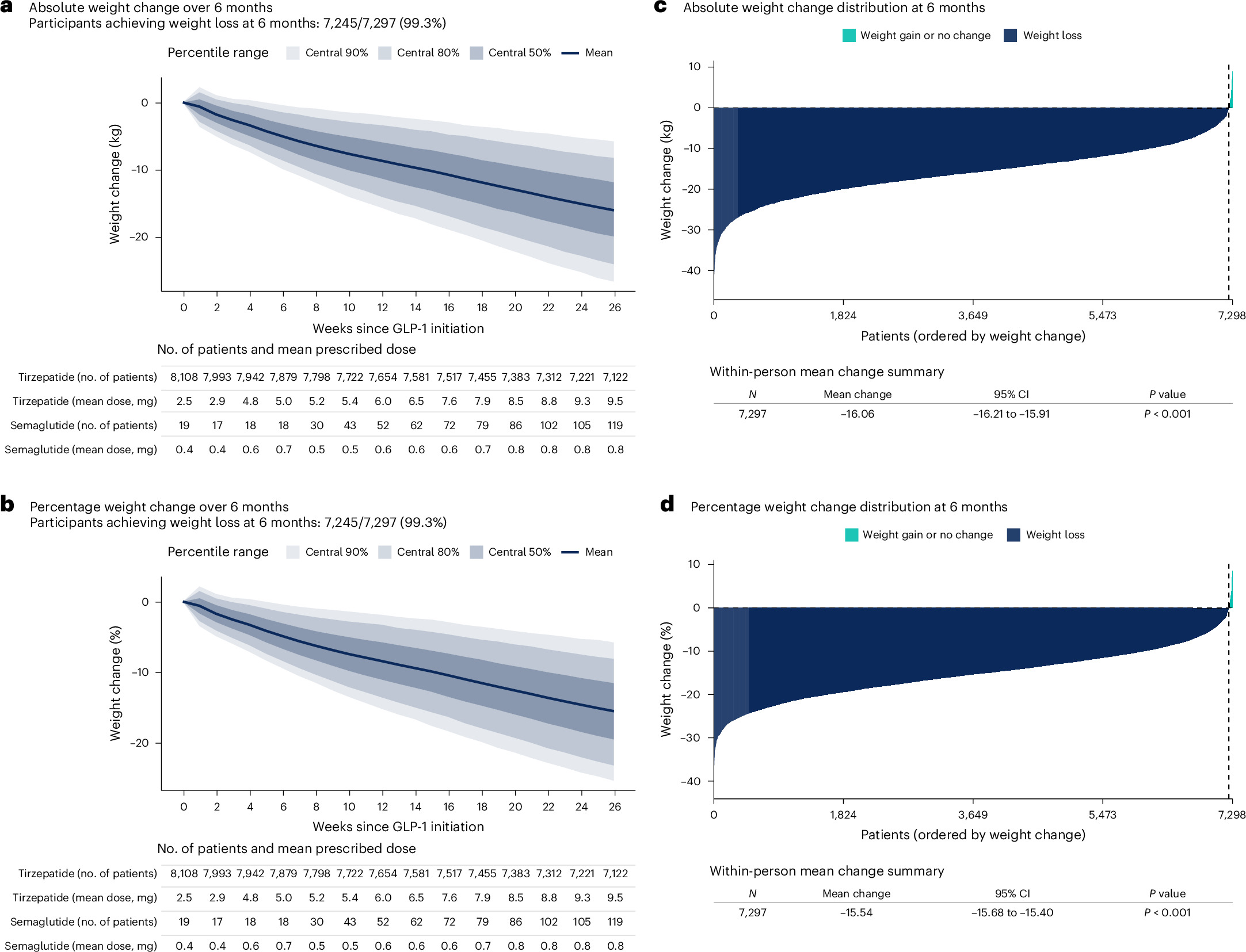
Among 7,297 participants with available weight measurements at six months, mean loss was 16.1 kg, or 15.5% of baseline body weight.
Treatment retention was 91.4% at six months; the study was not randomized and participants paid for the service.
WHY IT MATTERS
Obesity treatment requires more than issuing a prescription: screening, dose adjustment and managing side effects are important to safe care.
This program suggests that structured monitoring can operate at scale remotely, without showing whether it outperforms traditional care or is affordable for everyone.
WHAT IS NOW POSSIBLE
Before: implementation of supervised digital obesity care at scale was less documented. Now: real-world outcomes and retention are measured in a large UK treatment cohort.
WHAT MADE IT POSSIBLE
The system combined prescribing by UK clinicians, identity verification, home blood tests and scheduled video oversight.
Dose adjustments followed individual progress and tolerability rather than automatic escalation for everyone.
THE STORY
An app is not a replacement for a doctor. It can, however, help organize treatment with regular checks rather than prescription renewals alone. Researchers analyzed 8,127 women in the UK who started obesity medication through a structured digital service. Six months later, women with available weight measurements had lost an average of 15.5% of their starting weight. This is evidence about delivering monitored care remotely, not proof that the platform itself caused the weight loss.
The observational study, published in Nature Medicine on 16 October 2026, followed a largely tirzepatide-treated group: 99.8% received that medication, with a small minority starting semaglutide. Participants used a paid service with eligibility screening, blood testing, supervised weight checks and video follow-ups. Clinicians reviewed information and adjusted dosing in response to weight loss and side effects. There was no random assignment comparing digital care with conventional clinic visits.
The average six-month reduction was 16.1 kilograms, equivalent to 15.5% of baseline body weight, among the 7,297 women with available measurements. In that group, 83.1% lost at least 10% and 22.4% lost at least 20%. At six months, 7,429 women, or 91.4% of the initial cohort, remained on treatment. Participants with paired laboratory measurements also showed improvements in some glucose and lipid markers.
The comparison needs important boundaries. These medications had already demonstrated their weight-loss efficacy in randomized clinical trials. What is new here is evidence from a relatively large, entirely remote, structured delivery program. Without a control group, the study cannot isolate any advantage of the digital format over face-to-face care. The self-paying participants also had to navigate technological and medical procedures, so the cohort cannot automatically represent everyone living with obesity.
No serious treatment-related adverse events were reported during the observation period, but six months is too short to establish long-term safety, maintenance or equitable access. The paper discloses financial relationships involving drug companies and digital-care providers, which are relevant to its interpretation. The next test is whether a remote model remains effective, safe and affordable over longer periods and how it performs against alternative care pathways.
WHAT WE KNOW
The study covered 8,127 women, overwhelmingly receiving tirzepatide. [1]
Mean six-month weight reduction was 16.1 kg or 15.5% among 7,297 women with weight data.
Six-month treatment retention was 91.4%.
WHAT WE DON'T KNOW
No randomized comparison can identify the causal benefit of remote care itself.
Self-paying participants may differ from the wider population.
Long-term effectiveness, safety and equitable affordability remain unverified.
WHAT HAPPENS NEXT
Directly compare structured digital programs with established in-person care.
Track weight maintenance, adverse events and treatment discontinuation over years.
Evaluate access, privacy and cost across more diverse populations.
SOURCE TRACE
The UK observational cohort included 8,127 adult women, 99.8 percent receiving tirzepatide.
Among 7,297 women with six-month measurements, mean weight loss was 16.1 kg or 15.5 percent of baseline.
At six months 7,429 of 8,127 participants remained on treatment, a 91.4 percent retention rate.
The research was observational without a comparator and used a self-pay population with six months of follow-up.
SOURCES
- Real-world, digital-first delivery of GLP-1 receptor agonist therapy in womenOpen source
CURRENT EVIDENCE
PEER-REVIEWED
REAL WORLD OBSERVATIONAL CARE COHORT / NOT COMPARATIVE DIGITAL SUPERIORITY
WHAT WOULD CHANGE THIS?
- Randomized comparisons would establish the effect of the digital care model.
- Multiyear observation would measure safety and maintenance.
- More inclusive recruitment could test equity and access.