
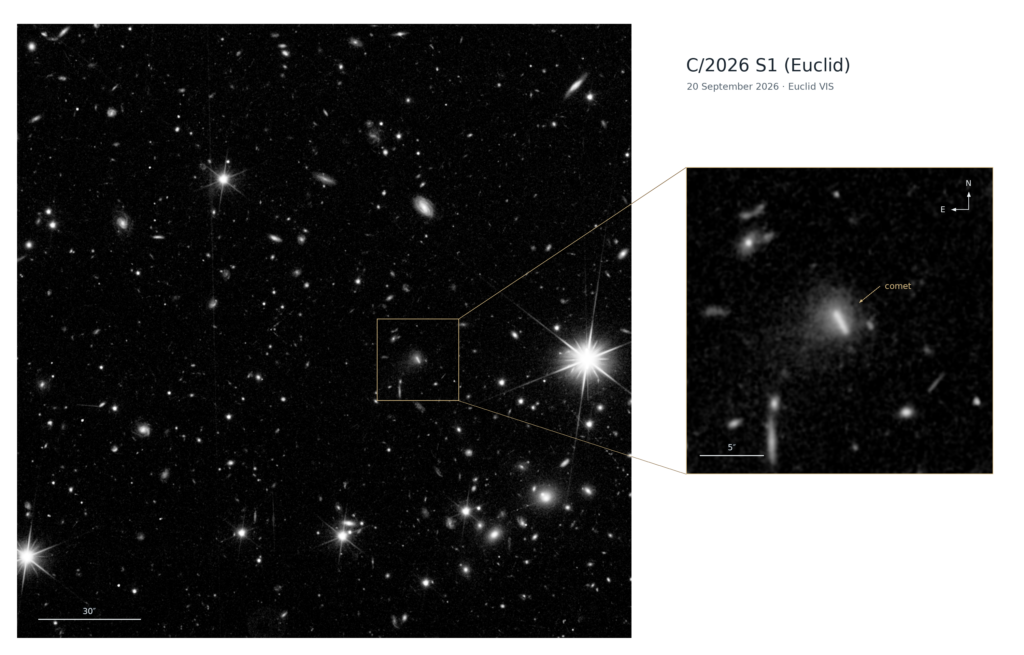
Euclid finds a new comet in images of distant galaxies
C/2026 S1 lies roughly 1.3 billion kilometres from Earth. A recurring trail in the telescope’s images started a sequence of observations and checks.
2 min read
CATEGORY
New possibilities that change what scientists can observe, measure, discover or experimentally test.
C/2026 S1 lies roughly 1.3 billion kilometres from Earth. A recurring trail in the telescope’s images started a sequence of observations and checks.
Scientists synthesized a tiny copper-hydride cluster that catalyzes selected light-driven oxidations to ketones. The chemistry works on real molecules in the lab, while the hydride arrangement and industrial practicality remain uncertain.
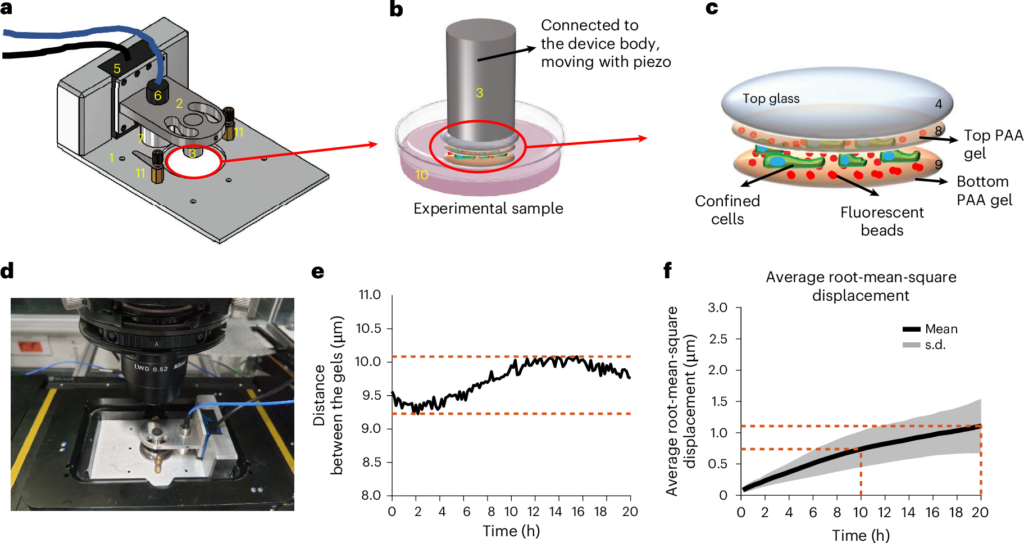
The CFM platform changes how tightly cells are confined while recording images and measuring traction forces. Experiments reveal an initial passive stress response followed by active contraction, not an immediate clinical application.
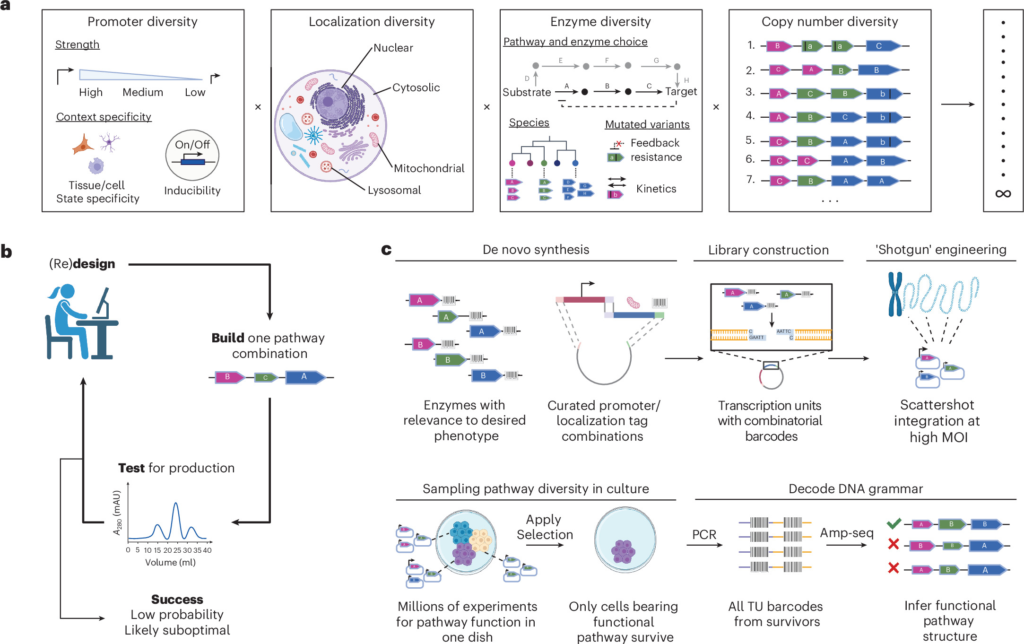
A genetic engineering method screened millions of combinations and enabled cultured cells to grow without added valine or isoleucine. This is a synthetic-biology demonstration, not a patient-tested therapy.

An NBER working paper reports an LLM workflow that reruns published calculations and proposes further tests at scale. Flags do not automatically mean the scientific findings are wrong.
Detectron sensors recognize selected RNA sequences and convert them into DNA barcodes. In bacteria, they recorded phage infections that could be read later by sequencing.
The tmPhoxID method uses a light-triggered reaction that crosses the cell membrane. In mice it reconstructed protein neighbourhoods around several receptors without studying inside and outside separately.
A peer-reviewed study links decline of a cellular recycling pathway to failed senescent-cell clearance; restoring it reduced cell burden and fibrosis in mouse models, not in patients.
LC-1 was selected using an mRNA as large as those needed for gene editors. In mice it improved editing in liver, brain and lung; this is not yet a human therapy.
MeerKAT traced radio bursts to β Pictoris b, separating them from the host star. The preprint interprets them as aurorae and infers at least a 1.25 kG field at the emission site.