
IN BRIEF
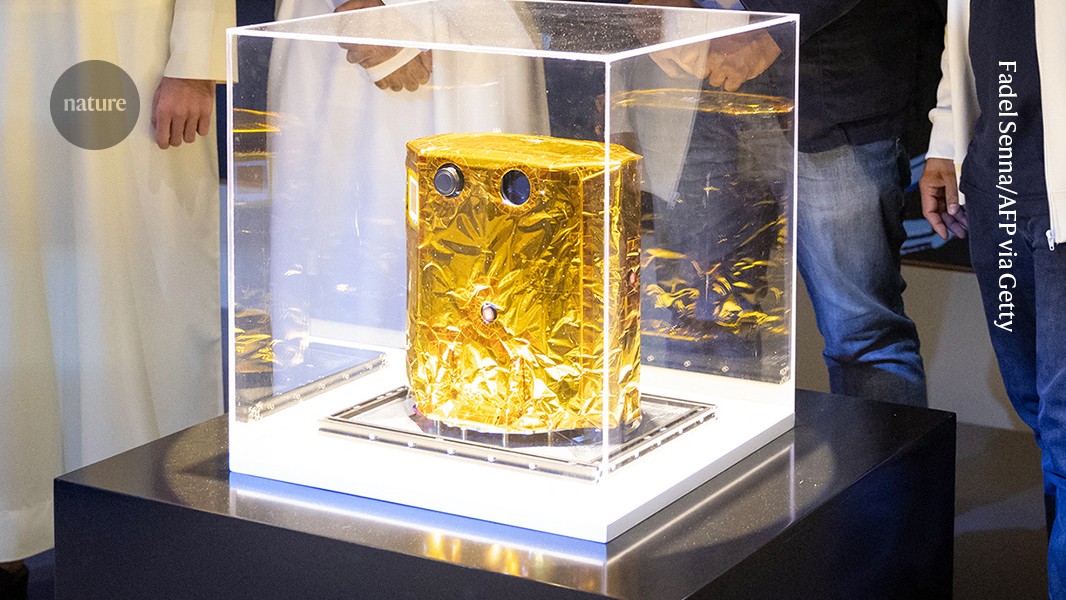
On 1 October 2026 the Technology Innovation Institute unveiled a probe built and tested in the United Arab Emirates.
According to Nature, the roughly 10-kilogram vehicle is intended to reach asteroid 269 Justitia after a mission launch planned for 2028.
The present achievement is a completed component; the journey, deployment and contact with the asteroid remain unproven.
WHY IT MATTERS
The new event is not the discovery of an asteroid. It is the local ability to design, assemble and test a flight component for an interplanetary mission. That represents a tangible industrial step for a country whose earlier Mars Hope orbiter was developed with extensive foreign collaboration.
This autonomy is specific, not total. The overall MBR Explorer mission still involves US partners and the newly completed probe must undergo integration and further system testing before launch.
WHAT IS NOW POSSIBLE
Before: domestic probe-component development at this mission level was not established by the prior Hope programme. Now: a physical locally built and tested component exists, although it has not flown.
WHAT MADE IT POSSIBLE
The Technology Innovation Institute's Propulsion and Space Research Center led design, assembly and tests with the UAE Space Agency and local universities. The component is scheduled to travel to the United States for integration into the main spacecraft.
Experience from the earlier Hope programme and a growing local technical base supported the effort. Completing one probe is nevertheless different from operating an entire independent deep-space mission.
THE STORY
A probe built in Abu Dhabi has reached the end of its terrestrial development phase. On 1 October 2026 the Technology Innovation Institute (TII) announced its completion for the Emirates Mission to the Asteroid Belt. If the mission succeeds, the small vehicle will separate from its carrier and reach asteroid 269 Justitia. What has happened now is the production and unveiling of the hardware, not an asteroid landing.
The measurable change is the country's ability to construct a deep-space mission component domestically. The UAE's Hope orbiter reached Mars in 2021, but foreign institutions played a much larger role in designing and building that programme. TII says the new probe was designed, assembled and tested in Abu Dhabi with contributions from Emirati institutions. That does not establish that the entire mission is being delivered without foreign partners.
The probe is expected to travel to Colorado for integration with the MBR Explorer spacecraft. The mission is targeting a March 2028 launch. Its carrier is designed to fly by six main-belt asteroids before the final encounter with 269 Justitia, a notably reddish body of interest because some of its material may have formed much farther from the Sun. These are intended mission steps and scientific hypotheses, not observations made by the new probe.
Nature describes the device as roughly 10 kilograms and reports on its public unveiling. TII says development tests are complete, but the public evidence reviewed does not amount to independent certification of every flight-qualification test. Integration, full-system verification, launch and years of deep-space travel are still ahead. Each is a meaningful technical boundary that could affect the ultimate outcome.
If the spacecraft reaches Justitia, its observations could add information about the composition and history of this unusual asteroid. That scientific value remains potential. The demonstrated consequence so far is industrial and engineering progress: a physical, locally built vehicle exists for an interplanetary task, but its performance in space has not been observed.
WHAT WE KNOW
TII announced on 1 October 2026 that an Abu Dhabi-built probe had been completed and tested; Nature reported on the unveiling and mission context. [1][2]
The deployable probe is intended to travel on MBR Explorer, with integration still required.
The planned mission includes six asteroid flybys and a final approach to 269 Justitia; the declared launch target is March 2028.
WHAT WE DON'T KNOW
There are no flight-performance data for this probe and no demonstrated autonomous operation at Justitia.
The public reports are not a complete independent audit of every qualification test.
A nationally built component does not prove that the full international mission could be built and operated without outside partners.
WHAT HAPPENS NEXT
Transfer the probe to Colorado for spacecraft integration and system-level verification.
Track technical readiness for the proposed 2028 launch and any changes to the mission plan.
Assess operational and scientific outcomes only after an actual encounter with Justitia.
SOURCE TRACE
TII unveiled an Abu Dhabi-built probe on 1 October 2026.
The probe still requires integration with MBR Explorer; launch is planned for 2028 and the Justitia encounter is future.
Nature reports that the probe weighs approximately 10 kilograms.
TII reports domestic design, assembly and testing; a flight demonstration has not yet occurred.
SOURCES
- Technology Innovation Institute Completes Asteroid-Landing Probe for Landmark Emirates Mission to the Asteroid BeltOpen source
- UAE completes Arab world's first solo space probe – and sets course for an asteroidOpen source
CURRENT EVIDENCE
ANNOUNCED RESULT
BUILT AND REPORTED GROUND TESTED / NOT LAUNCHED
WHAT WOULD CHANGE THIS?
- Independent publication of full-system qualification evidence would strengthen the engineering validation.
- Successful launch and deployment would demonstrate an operational capability beyond ground-built hardware.
- Scientific measurements at Justitia would convert a conditional research objective into a documented outcome.